

Time is often the most honest witness to change. In December 2018, when the Zijin team first arrived in the old mining town of Bor, Serbia, they were met with both anticipation and skepticism. How could they reinvigorate a struggling century-old copper operation? How could a resource company coexist with and even thrive alongside the local population? Seven years on, the answers can be found in the Bor River, which has seen its water quality improve by over 98%, the blooming tulips and roses planted at production sites, and the young people happily returning Bor to build their futures right here at home.
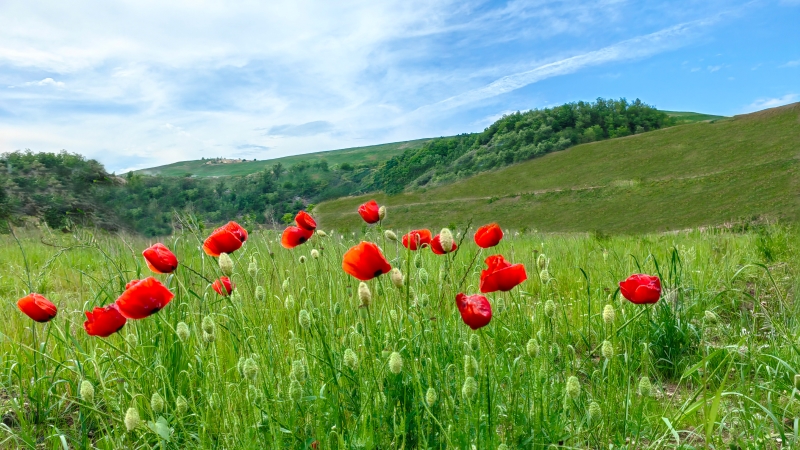
Lake Robule after remediation
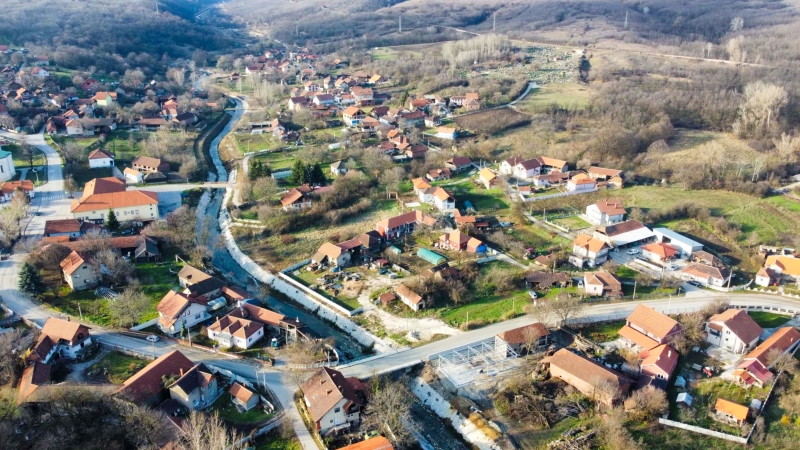
Bor River
“I have lived in Bor all my life, and I have never seen the Bor River this clear,” said a local woman in her seventies, in a thank-you letter to Serbia Zijin Copper. The company now operates the once-distressed Bor Copper Complex, previously managed by RTB Bor.
The lady’s words reflect the feelings of many in Bor. For over a century, unsustainable mining practices and the direct discharge of untreated urban sewage had severely polluted the Bor River, making it one of Europe’s most contaminated waterways. Serbia’s national newspaper Politika once published a report titled “The ‘Dead River’ of Bor Returns to Clarity,” quoting an environmental researcher who recalled, “From 1978 to 1980, I lived in Bor. The Bor River at that time looked like a ‘dead river.’ It was lifeless, and the water flowed like untreated oily sludge.”
“In the pre-Zijin era, RTB Bor had only basic wastewater treatment systems. They were outdated and their capacity was limited. A significant portion of untreated wastewater was discharged directly into the surrounding waterways. That had a major impact on the rivers nearby and the downstream environment,” said Zhong Junhua, Deputy Director of Environmental Protection at Serbia Zijin Copper. “Back then, RTB Bor hired a certified third-party organization to conduct a baseline environmental study. The study found severe contamination in both the surface water and river sediments downstream of the Bor Copper Complex. The Bor River was also affected.”
Systematic Solution to Water Pollution
Soon after Zijin became the operator of RTB Bor, it launched a comprehensive survey of local water bodies to identify sources of pollution. It then began designing and implementing targeted wastewater treatment and reuse systems.
Lake Robule lies in a valley below an old mining waste dump and a municipal landfill. Due to severe erosion, liquid from the old waste dump leached into the lake, leading to excessive concentrations of heavy metals and turning its water red. This in turn made the lake the primary source of heavy metal pollution to the Bor River. Back in the day, locals called it the “Red Lake”.
“This issue was a legacy problem that predated Zijin’s involvement,” said Qiu Guozhu, CEO of Serbia Zijin Copper. “However, to help address the root cause of the water pollution problem, we engaged with the Serbian government at both national and local levels, as well as with our shareholders. Following these discussions, and in line with our commitment to corporate social responsibility, we voluntarily invested US$3.53 million in 2021 to construct a wastewater recovery system for Lake Robule. The project also included backfilling, reclamation, and greening of the lake area.” The result is a lake transformed into a vast green space.
In December 2021, the company installed in a real-time water quality monitoring system for the Bor and Pek rivers, entrusting its operation and maintenance to the Mining Institute Belgrade for transparent monitoring. Between May 2024 and May 2025, the company completed a 7.4-kilometer riverbed dredging and remediation project for the Bor River. It also built a multi-stage purification system for municipal wastewater and conducted environmental improvements along the Bor River. In addition, a six-stage sedimentation pond system was constructed to treat municipal wastewater through multiple sedimentation and oil separation processes, enabling its reuse in mining operations.
Thanks to more than six years of continuous remediation, the water quality of the Bor River has improved by over 98%, marking a fundamental shift as it returns to natural clarity. This achievement has drawn widespread media coverage and significant public recognition.
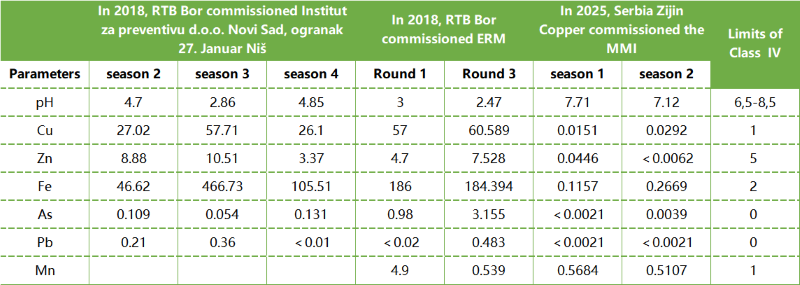
Table : Water Quality Data Downstream of the Bor River (Unit: mg/L, pH value is dimensionless)