

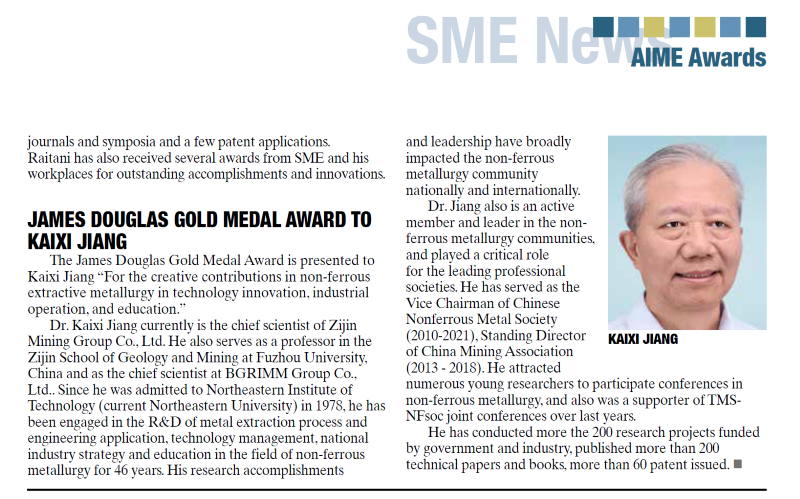
Dr. Kaixi Jiang, chief scientist of leading global metals miner Zijin Mining, has recently been named the 2026 laureate of the James Douglas Gold Medal by the American Institute of Mining, Metallurgical, and Petroleum Engineers (AIME). As the first scholar from China to receive this distinction, Dr. Jiang was recognized for his creative contributions to technological innovation, industrial operations and education in non-ferrous extractive metallurgy.
The award, established in 1922 and named after 19th-century mining and metallurgical pioneer James Douglas, is widely regarded as the highest international honor in non-ferrous extractive metallurgy. Its roll of recipients reflects a century-long record of the discipline’s technical evolution across the world.
At the same time, the Extraction and Processing Division (EPD) of The Minerals, Metals & Materials Society (TMS), an AIME member society, has selected Dr. Jiang as its EPD Distinguished Lecturer. The two distinctions not only spotlight his 48-year research career, but also signal international recognition of Chinese approaches and technologies in the extraction of metals from complex materials.
“The honor is not mine alone”, Dr. Jiang said. “It belongs to many Chinese scientists who have been continually driving innovation in nonferrous extractive metallurgy. I am merely one of them.”
He also acknowledged to his team that he is genuinely encouraged by the awards, noting, “This means the path we have chosen has gained global recognition, and that our work represents a contribution by China to global nonferrous metallurgy”.
A Minimalist Theory for Maximizing Resource Extraction
Dr. Jiang’s journey in metallurgy began in 1978, when he enrolled at what was known as the Northeastern Institute of Technology (currently Northeastern University) at the age of 15, majoring in heavy metals smelting. After completing his postgraduate studies, he joined the Beijing General Research Institute of Mining and Metallurgy as a researcher. He then did a PhD at RWTH Aachen University in Germany in 1990 and returned to China in 1995 to continue his research.
Over more than two decades of study and work, he built a solid understanding of theories while gaining a systematic view of the global frontiers of non-ferrous metallurgy. Throughout, one question stayed with him: could China’s non-ferrous metallurgical industry — then characterized by an average resource extraction of only about 35%, and high energy consumption and pollution — be transformed fundamentally?
A turning point came in 1996, when he revisited an imported process for treating arsenic filter cake at China’s first modern flash copper smelter in Jiangxi Province. In the 1980s, a Chinese smelter procured the state-of-the-art technology and equipment based on what was used by a Japanese smelter. That included a complex and costly process that melted copper cathode into copper powder, converted it into copper sulfate, and then used this to precipitate arsenic sulfide, followed by air oxidation and sulfur dioxide reduction, etc.
The process worked in Japan because a neighboring nickel refinery supplied copper powder containing impurities. Without such a source, the Chinese smelter in Jiangxi was melting high-grade cathode copper just to produce copper powder and copper sulfate.
In late 1996, while researching copper cathode quality, he stumbled upon that particular process and grew increasingly suspicious of it.
Questioning why such a process had run for over a decade without being challenged, Dr. Jiang immersed himself in literature from China and abroad and repeatedly worked through the reaction pathways. He formulated a new solution: eliminate copper powder and copper sulfate; use oxygen under pressure to oxidize arsenic directly to the pentavalent state, then reduce it with sulfur dioxide so that arsenic trioxide crystallizes directly. Nearly two years of experimental work delivered breakthrough results.
He presented the findings at the 3rd International Symposium on Hydrometallurgy in Kunming in 1998. After almost a decade of refinement and industrial roll-out, the “pressure leaching technology for arsenic filter cake” became the mainstream process in China for treating arsenic-bearing wastes from copper smelting. The technology received the Second Prize of the State Technological Invention Award in China and, more importantly, catalyzed the emergence of a new conceptual framework.
“I’ve been thinking about what we are really pursuing,” Jiang Kaixi said. “In essence, it comes down to one thing: do useful work instead of pointless work.”
Around 2000, Dr. Jiang distilled his thinking into what he termed the “Principle of Minimum Chemical Reactions”. The concept is plain and simple: in metal extraction, one must seek to maximize the necessary chemical reactions while reducing unnecessary or harmful by-reactions and equipment sizes, minimizing the consumption of auxiliary materials and energy, as well as the production of waste, to achieve processes that are green, efficient and low-cost.
Once the principle was articulated, a series of technologies followed. Dr. Jiang led the development of controllable pressure leaching, and pioneered a pressure leaching process for the simultaneous extraction of zinc, gallium and germanium. His team also created many green, high-efficiency processes, including reverse leaching of laterite and hydrometallurgical treatment of complex molybdenum concentrates. Among these, the pressure leaching technology for zinc concentrates keeps the unwelcome pyrite essentially inactive, reducing residue generation by more than 70% while enabling the recovery of pyrite from the leach residue.
In complex oxide ores, he put forward an integrated approach: apply mineral processing wherever feasible, use metallurgical processing where appropriate, and ensure that beneficiation and metallurgical processes complement each other. Based on this concept, he developed new, combined beneficiation–smelting technologies for complex oxides, which have been in use at several large-scale mining and metallurgical operations.
For refractory copper oxides at Tangdan in Yunnan, Dr. Jiang devised a new “ammonia leaching–flotation of leach residue” process, enabling the construction of two demonstration plants. For zinc oxides in Peru, he was the first to bring the reduction–volatilization process into industrial application. For the Huoshaoyun lead–zinc oxide deposit in Hotan, Xinjiang — the world’s second-largest and Asia’s largest of its kind — the smelting process he designed led three separate engineering institutes to change their approach in the early stage.
International peers have underlined the theoretical and practical value of his work. Professor Bernd Friedrich of RWTH Aachen University commented: “Dr. Jiang excels at applying rigorous theoretical analysis to practical problems. The principles he has put forward not only optimize extraction processes, but also change the way we look at resource utilization.”
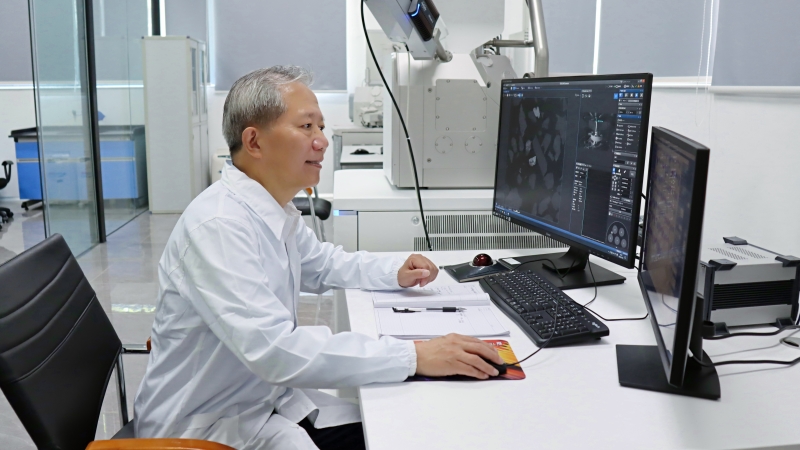
Developing Solutions for Mine Sites Worldwide
Dr. Jiang joined Zijin Mining in 2019 as Chief Engineer and later Chief Scientist, drawn by the opportunity to convert technologies into industrial reality at the company. Operating on Zijin’s global platform, he has been able to test and scale his ideas across a diverse portfolio of deposits and operating environments.
Travelling frequently between China, Colombia, Serbia, Tajikistan, and the Democratic Republic of the Congo, he has worked to align process flowsheets with local ore characteristics, improving efficiency, environmental performance, and energy consumption at Zijin’s operations worldwide. He believes that there is no single “standard answer” in resource extraction — only optimal pathways tailored to specific ore bodies and local contexts.
At the Čukaru Peki copper-gold mine in Serbia, the team confronted a challenging sulphide concentrate with a gold grade of 2–5 grams per tonne. Conventional options such as direct cyanidation, roasting-cyanide leaching, and pressure oxidation treatment could not deliver satisfactory gold recovery; they also left sulphur underutilized, drove up costs, and generated high volumes of waste. Many experts regarded the concentrate as essentially unviable.
Dr. Jiang, however, said it is viable. He proposed a different route: direct smelting of the sulphide concentrate to produce a matte rich in iron sulphide, using the matte to concentrate gold, silver, and copper while simultaneously producing sulfuric acid. The new process is clean and efficient: with an input cost equivalent to about 0.5 grams of gold, it can turn 1.5–4.5 grams of contained gold into net profit.
Through a subsequent literature review, Dr. Jiang learned that a 19th-century Chicago-based company once explored similar smelting-based treatment of pyritic gold concentrates. With the advent of lower-cost cyanidation, that path was abandoned. A century later, Dr. Jiang has brought it back as a viable route and has further advanced it by demonstrating that pyrite alone, without added copper concentrate, can be smelted to capture gold effectively. Tests showed high enrichment of gold and recovery of other metals, with sulphur utilization far superior to pressure oxidation and roasting, while avoiding additional energy consumption and carbon emissions and enabling power generation from residual heat.
Industry peers now see this approach as a potential mainstream technology for unlocking low-grade gold-bearing resources in the future.
In Xizang, at the Julong Copper Mine — a high-altitude, cold, and oxygen-poor environment — Dr. Jiang developed an “enhanced leaching” technology that suppresses soluble silica and improves copper leaching rate. This innovation underpinned the construction of China’s first high-altitude hydrometallurgical copper plant with a capacity of 10,000 tonnes per year, providing new technical support for developing Xizang as a national base for resources vital to the clean energy transition.
At Qinghai’s salt lakes, industrial-scale lithium extraction was once constrained by engineering challenges. A foreign supplier had quoted more than RMB 400 million for a centrifugal extraction system. Working with Professor Lijuan Li of the Qinghai Institute of Salt Lakes, Chinese Academy of Sciences, Dr. Jiang analyzed the extraction kinetics and advocated a different route: replacing imported centrifuges with mixer-settler units.
By re-engineering conventional equipment for unstable brine and high-solids conditions, his team succeeded in developing a scalable extraction system. The entire 10,000-tonne-per-annum production line was built with a total investment of just RMB 180 million — less than 40% of the original quoted cost. The world’s first large-scale brine solvent-extraction lithium plant was commissioned in Qinghai, with an annual output of 10,000 tonnes of high-purity lithium chloride, marking the emergence of a new process for lithium extraction from brines.
Beyond these landmark projects, Dr. Jiang has contributed to advances in carbon-neutral metallurgical processes, extension of the life of rotary kilns, safe disposal of arsenic residues, copper cathode quality improvement and recovery of platinum group metals (PGMs).
In 2024, he was named one of the first 81 “National Distinguished Engineers” in China. Professor David Dreisinger of the University of British Columbia noted that ‘Dr. Jiang’s work has enabled the development of many energy-saving, low-carbon processes and innovative equipment designs. He has made outstanding contributions to the industrial application of non-ferrous metallurgy.’
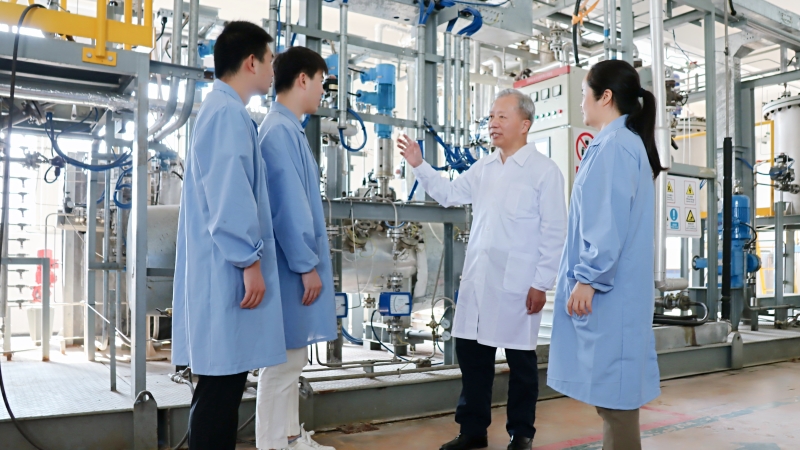
A Mentor Shaping the Next Generation of Metallurgists
For Dr. Jiang’s younger colleagues and students, the international awards he won are more than a personal honor. They see them as encouragement and as a reminder that long-term commitment to high‑quality research has real value and meaning. It has also reinforced a belief that scientific research is not just a matter of personal interest, but a responsibility — to contribute ideas and solutions for the world at large.
In addition to his role as a scientist in Zijin, Dr. Jiang is a professor at the Zijin School of Geology and Mining at Fuzhou University. His selection as EPD Distinguished Lecturer is widely viewed as a strong recognition of his achievements as a professor and mentor.
Students describe him as both strict and kind. His strictness comes from a deep respect for scientific research; his kindness shows in his commitment to helping young people grow.
One former student recalls being reprimanded early in his master’s studies. He was spending too much time on computer games and falling behind on his thesis. Dr. Jiang called him in for a serious conversation. That evening, Dr. Jiang went to the dormitory to follow up and found the student still in front of the computer. The student later admitted that, for days afterwards, he could hardly eat because he was filled with remorse.
After graduation, the student wanted to switch entirely to computer science. Dr. Jiang instead urged him to stay in metallurgy, pointing out that the discipline also needed people who could build models and databases. He helped find an adviser from the computer science department and encouraged the student to pursue a PhD in that area. The student stayed. Today, he is a leading expert in non‑ferrous metallurgy and supervises PhD candidates himself.
Dr. Jiang calls this “teaching according to each student’s characteristics”. He says he tries not to give up on anyone with real aptitude.
Colleagues at Zijin say he has a particular ability: to turn “impossible” into “possible”. One example is the process of using gold concentrates alone to produce a matte for gold concentration. The prevailing industry view was that only high‑grade copper matte could effectively capture gold. Dr. Jiang disagreed. Starting from the microstructures of slag and matte, he argued that copper grade was not the decisive factor. Working with his team, he framed bold hypotheses and then designed careful experiments to test them. The results showed that even very low‑grade copper mattes could still exhibit excellent gold‑capturing performance.
His team had also been puzzled by unstable gold grades in slag from small‑scale smelting tests — the assay values fluctuated significantly. After hearing about the data, Dr. Jiang did not rush to conclusions. Instead, he explained that there was no reasonable mechanism to “strip” gold from slag in the 0.5–2 g/t range; far more likely, small amounts of matte were being mechanically mixed into the slag because of imperfect test procedures, causing the apparent variation. With a few sentences, the issue became clear to everyone.
Many of his former students now hold senior technical roles. One of them, Sanping Liu, Deputy Director of the Metallurgy Institute at BGRIMM, says Dr. Jiang has a gift for explaining difficult principles and complex processes in straightforward language. Working with him, he says, makes people feel grounded and assured.
That clarity is matched by firm expectations. When students report results, Dr. Jiang insists they not simply list numbers but also analyze what they mean. Those who fail to do so are reproached on the spot. He reminds them that “scientific research leaves no room for carelessness, and every figure and conclusion must be grounded in evidence”. Over time, this insistence on precision and honesty with data has become part of the team’s culture.
The same attitude underlies what he often tells younger researchers. At an internal seminar, someone once asked what kind of researcher deserves respect. His reply was measured and simple: those who do serious research, with no fabrication of data or exaggeration of their findings. He went on to say that impatience and a rush for quick results must be resisted; what matters is doing the work thoroughly and honestly so that the results are solid and the innovation truly meaningful.
The room was quiet at that moment. Several younger colleagues later said those few sentences stayed with them more than any technical guidance.
Over more than 30 years of advising graduate students, Dr. Jiang has trained more than 30 master’s and PhD graduates. Seven of them now receive special allowances from China’s State Council, and two have been recognized as leading talent under the country’s “Ten Thousand Professionals Program”.
He often reminds his students that his generation lived through periods when China was constrained by a lack of access to key technologies. That experience, he says, made clear that core technologies are obstacles that cannot be sidestepped. He said: “The priority now is to help cultivate more people who can continue moving that frontier forward.”
A Career Defined by Focus and Purpose
From boarding a train to Shenyang as a teenager in 1978 to being named the 2026 James Douglas Gold Medalist, Dr. Jiang has devoted 48 years to metallurgy. He has led more than 200 government- and industry-funded research projects, published over 200 technical papers and books, and holds more than 60 authorized patents.
He characterizes his career not as one of exceptional speed, but of consistent, deliberate progress — always asking why a step is necessary, whether a shorter path exists, and whether others have tried and succeeded or failed.
Today, his daily routine remains largely unchanged: working in the office, tackling technical challenges, guiding younger colleagues, and reviewing papers. When asked about his ability to respond quickly to complex technical questions, he points to decades of accumulated experience: some of the problems now raised by younger engineers are ones he first encountered 30 years ago.
In many ways, his professional life traces a living history of modern extractive metallurgy — demonstrating how universal chemical principles can be interpreted and implemented through locally tailored, lower-carbon and efficient solutions.
As Zijin Mining advances its goal of becoming a green, high-tech, top global mining group, Dr. Jiang’s work exemplifies how fundamental research, process innovation, and engineering practice can be integrated to deliver both industrial performance and environmental benefits — and how Chinese practices in metallurgy can contribute to solutions for the industry worldwide.
About Zijin Mining
Zijin Mining is a leading global metals and mining company and one of the world’s largest producers of gold, copper, and zinc. The company has more than 30 large-scale mining operations and projects across 19 countries on 5 continents. Leveraging strong in-house research, engineering, and development capabilities, Zijin maintains high operational efficiency and low costs in both acquisitions and operations. This enables the company to be an industry leader in value creation, underpinned by its philosophy of pursuing development for all and sustained by superior environmental, social, and governance performance. Zijin’s shares trade on the Hong Kong Stock Exchange (HKEX: 2899) and the Shanghai Stock Exchange (SSE: 601899).